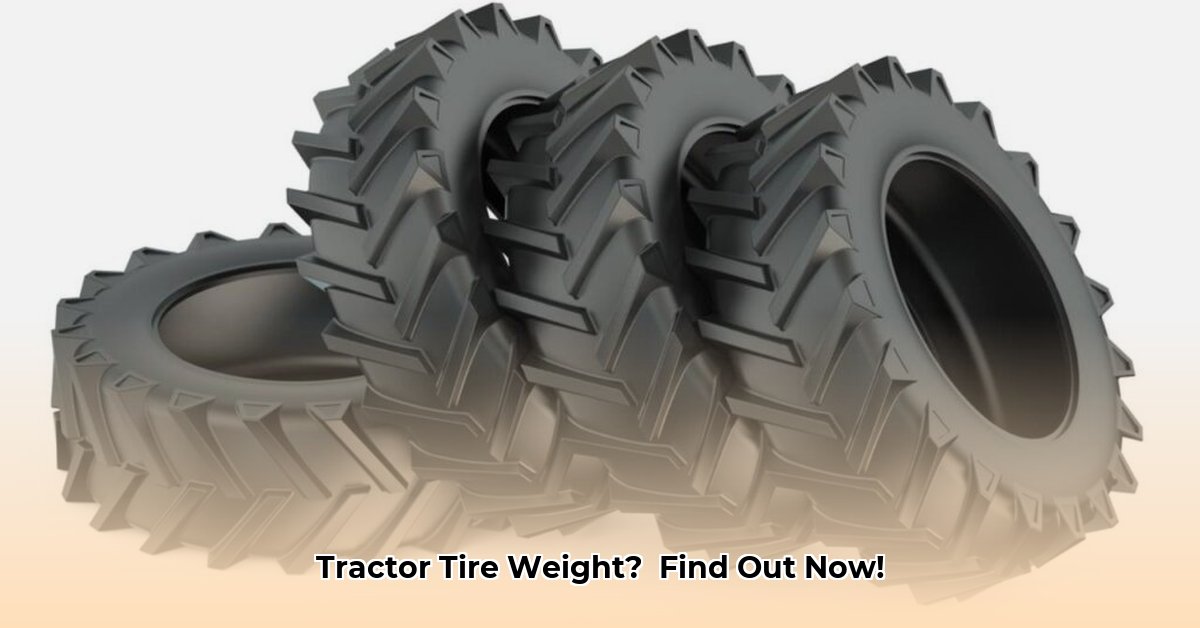
Determining the weight of a tractor tire isn't straightforward; it depends on several interconnected variables. This guide provides a step-by-step process to accurately determine this vital piece of information, along with explaining its importance for optimal tractor performance and safety. For more detailed tire information, check out this helpful resource.
Understanding the Factors Affecting Tractor Tire Weight
Several factors influence a tractor tire's weight, making a single definitive answer impossible. Understanding these nuances is crucial for accurate weight determination and informed decision-making.
Key Variables: Size, Type, and Construction
- Tire Size: The most obvious factor. Larger tires, designed for larger tractors, inherently weigh more than those on smaller models. A simple analogy is comparing a bicycle tire to a semi-truck tire.
- Tire Type: Different types of tires—agricultural, industrial, turf, and forestry—have varied constructions and materials, affecting weight.
- Construction: Radial tires, known for their robust construction and strength, typically weigh more than bias-ply tires due to their more complex design with stronger internal components.
- Fill Material: The choice of fill material significantly impacts weight. Air-filled tires naturally weigh less than those filled with water, antifreeze, or specialized foam, which add considerable mass.
Why Knowing the Weight Is Crucial
Knowing the precise weight of your tractor tires isn't merely interesting; it's essential for:
- Safety: Overloading tires leads to increased wear and tear, potentially causing catastrophic failures and safety hazards. Underestimating weight can compromise tractor stability and handling.
- Performance: Proper tire weight is crucial for optimal fuel efficiency, traction, and overall tractor performance. Inaccurate weight estimations can lead to decreased efficiency.
- Maintenance: Accurate weight data aids in the selection of appropriate lifting equipment and storage methods, preventing damage to tires and associated machinery.
Determining Tractor Tire Weight: A Step-by-Step Guide
The most reliable method for determining tractor tire weight is by consulting manufacturer specifications. This guide outlines the process:
Step 1: Identify Tire Specifications: Carefully examine your tire's sidewall. You'll find a series of numbers and letters denoting the tire's size and other relevant information. Record this information precisely. This code is crucial for finding the correct specifications in the next step.
Step 2: Consult the Manufacturer's Resources: Visit the tire manufacturer's website (or contact their customer service) and locate the specifications sheet, data sheet, or catalog for the specific tire model you identified in Step 1. These documents usually list the weight of the tire. Remember that the information provided often will denote the weight of the tire itself, and may not include wheel weights, fill material, or additional components.
Step 3: Account for Fill Material: If your tire is filled with a liquid ballast (like water or antifreeze) or foam, remember to add this weight to that of the tire itself. Consult the manufacturer's specifications of the fill material to check its precise weight per unit volume, and calculate the total added weight of the fill material.
Step 4: Unit Conversion (If Necessary): Manufacturer's specifications might list weights in kilograms (kg) while you need it in pounds (lbs) or vice-versa. Use an online converter for accurate unit conversion.
Step 5: Verification through Weighing: For maximum accuracy, consider weighing the tire assembly (tire and wheel) using a calibrated heavy-duty scale. Ensure the scale is properly leveled before use. Weighing the tire independently of the tractor assembly gives you the most accurate weight and allows you to detect any significant discrepancies compared to the manufacturer's data.
Practical Considerations and Weight Estimates
While manufacturer specifications are paramount, general weight ranges can provide a preliminary estimate:
| Tractor Size Category | Approximate Weight Range (lbs) |
|---|---|
| Compact Tractors | 100-400 |
| Mid-Size Tractors | 300-600 |
| Large Tractors | 600-1000 |
| Extra-Large Tractors | 800-1500+ |
Important Note: These are rough estimates and can vary greatly based on tire size, type, construction, fill material, and manufacturer.
Conclusion: Prioritize Accuracy for Optimal Results
Accurately determining tractor tire weight is crucial for safety, performance, and efficient operation. While general ranges exist, always prioritize obtaining precise weight information through manufacturer specifications and, ideally, direct weighing for the most accurate assessment of the load, especially when liquid ballast is utilized. This extra step will contribute to the longevity of your equipment, the safety of your operation, and your overall success in your agricultural activities. Ignoring this step may lead to adverse effects on the long-term productivity and profitability of your enterprise.